2025 Global Crypto Regulation: Year in Review
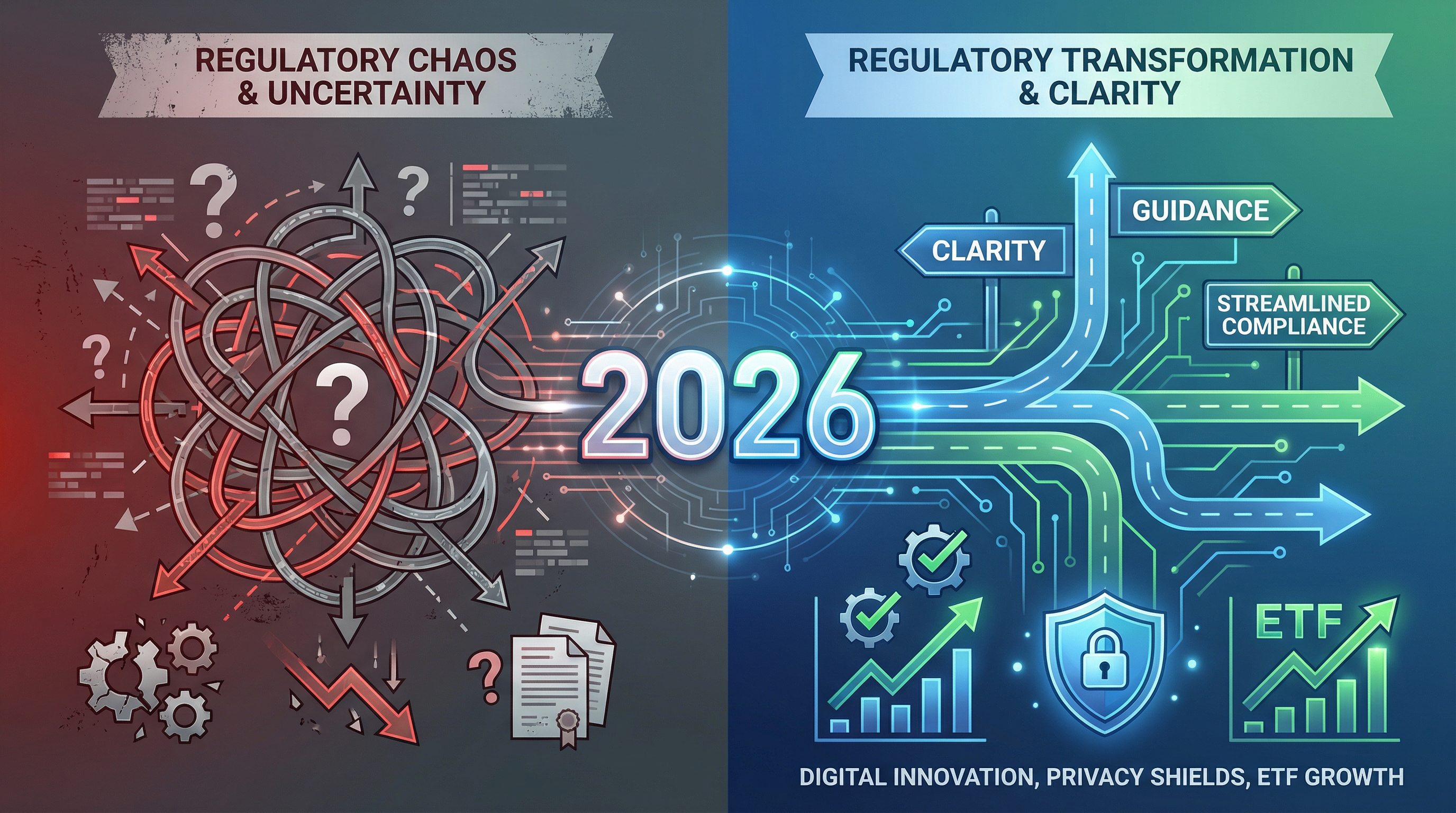
2025 marked a watershed moment in global cryptocurrency regulation. From the EU's MiCA implementation to the US GENIUS Act, this comprehensive review examines the most significant regulatory developments across 30+ jurisdictions and identifies emerging trends shaping 2026.
2025 Global Crypto Regulation: Year in Review
Author: James Borzilleri
Published: January 6, 2026
Reading Time: 25 minutes
The year 2025 marked a watershed moment in global cryptocurrency regulation, as jurisdictions worldwide transitioned from experimental frameworks to comprehensive, enforceable regimes. From the European Union's full implementation of the Markets in Crypto-Assets (MiCA) Regulation to the United States' landmark GENIUS Act for stablecoin oversight, regulators demonstrated unprecedented coordination and clarity. This year-in-review examines the most significant regulatory developments across thirty-plus jurisdictions, analyzing their implications for the future of digital assets and identifying emerging trends that will shape the landscape in 2026 and beyond.
Executive Summary
The global regulatory environment for cryptocurrency underwent fundamental transformation in 2025, characterized by three overarching trends: regulatory maturation, stablecoin focus, and international coordination. Major economies moved decisively from consultation to implementation, with the EU's MiCA framework taking full effect, Brazil finalizing its VASP authorization regime, and the United States achieving bipartisan progress on stablecoin legislation through the GENIUS Act. Asia-Pacific jurisdictions advanced institutional trading infrastructure while tightening retail protections, and emerging markets laid groundwork for formal licensing frameworks that balance innovation with consumer safeguards.
Stablecoins emerged as the primary regulatory focus across jurisdictions, reflecting their growing role in payments and cross-border transactions. Hong Kong, Thailand, Canada, and Australia all introduced or refined stablecoin-specific rules, establishing high bars for licensing while acknowledging these instruments' utility for legitimate commerce. Meanwhile, international bodies including the Financial Action Task Force (FATF) and Bank for International Settlements (BIS) pushed for global consistency in anti-money laundering standards and prudential requirements, creating pressure on laggard jurisdictions to align with evolving norms.
This report provides jurisdiction-by-jurisdiction analysis of 2025's most significant developments, organized by region and supplemented with insights on international organizational activity. For businesses navigating this complex landscape, the message is clear: regulatory certainty is increasing, but compliance obligations are intensifying, demanding proactive engagement with supervisors and investment in robust operational frameworks.
Americas
United States: The GENIUS Act and Coordinated Agency Action
2025 Crypto Adoption Ranking: 6
Main Regulators: Securities and Exchange Commission (SEC), Commodity Futures Trading Commission (CFTC), Office of the Comptroller of the Currency (OCC), Financial Crimes Enforcement Network (FinCEN)
Status: State-level money transmitter licensing; federal securities and commodities oversight
The United States achieved landmark progress in 2025 with the passage of the GENIUS Act (Guiding and Establishing National Innovation for US Stablecoins), representing the first comprehensive federal framework for stablecoin regulation. The bipartisan legislation, signed into law in late 2025, establishes a dual regulatory structure where the OCC supervises bank-issued stablecoins while state regulators oversee non-bank issuers under federal standards. The Act requires full reserve backing, monthly attestations, and strict redemption guarantees, effectively creating a regulated alternative to unregulated offshore stablecoins.
Beyond stablecoins, 2025 saw unprecedented coordination among federal agencies under the Trump administration's pro-innovation stance. The SEC dropped several high-profile enforcement actions against crypto firms, signaling a shift toward regulatory clarity over enforcement-by-litigation. The CFTC expanded its oversight of crypto derivatives markets, approving multiple Bitcoin and Ethereum ETF products that attracted institutional capital. Meanwhile, the OCC granted federal banking charters to Ripple, Circle, and three other crypto-native firms, legitimizing their operations and providing access to Federal Reserve payment systems.
State-level activity also intensified, with Wyoming, Texas, and Florida competing to attract crypto businesses through favorable tax treatment and streamlined licensing processes. However, the patchwork of state money transmitter requirements continued to create compliance challenges for multi-state operators, underscoring the need for federal preemption or harmonization efforts in 2026.
The GENIUS Act's passage represents a turning point for US crypto policy, providing the regulatory certainty that institutional investors and traditional financial institutions have long demanded. As implementation details emerge in 2026, attention will focus on how federal and state regulators coordinate oversight and whether additional legislation addressing broader crypto asset classes will follow.
Brazil: VASP Authorization Regime Goes Live
2025 Crypto Adoption Ranking: 5
Main Regulator: Banco Central do Brasil (BCB)
Status: Authorization for virtual asset service providers since November 2025
Brazil's digital asset ecosystem reached a critical milestone in November 2025 when the BCB published three resolutions operationalizing its regulatory powers over VASPs. The authorization regime, set to commence on February 2, 2026, requires firms to comply with comprehensive requirements across anti-money laundering, disclosure, transparency, and minimum capital thresholds ranging from BRL 10.8 million (USD 2 million) to BRL 37.2 million (USD 6.9 million) depending on business model and scale.
The rules bring crypto transactions—particularly those involving stablecoins and cross-border transfers—under Brazil's foreign exchange and payments oversight. Transactions exceeding approximately USD 100,000 trigger enhanced reporting obligations, including detailed counterparty and asset-type disclosures. The government is reportedly considering additional taxation on cryptocurrency use for cross-border payments, reflecting concerns about regulatory arbitrage through stablecoins, which account for roughly 90% of Brazil's surging crypto activity according to BCB Deputy Governor Gabriel Galipolo.
Brazil's central bank digital currency project, Drex, took an unexpected turn in August when the BCB announced it was abandoning blockchain-based architecture in favor of a short-term lien reconciliation solution. The decision surprised private sector pilot participants and likely delays distributed ledger technology adoption in Brazil's payments ecosystem, though the central bank emphasized its commitment to maturing blockchain technology for future applications.
VASPs operating in Brazil before the February 2026 go-live date benefit from grandfathering provisions, with a 270-day grace period (until October 30, 2026) to achieve full compliance. This transition period will be critical for the hundreds of exchanges and service providers serving Brazil's crypto-enthusiastic population, which ranks fifth globally in adoption. Looking ahead, implementation challenges—particularly around capital requirements and cross-border transaction reporting—will test the BCB's supervisory capacity and industry's ability to meet heightened standards.
Canada: Stablecoin Tightening and Federal Regulation Plans
2025 Crypto Adoption Ranking: 25
Main Regulators: Canadian Securities Administrators (CSA), Financial Transactions and Reports Analysis Centre of Canada (FINTRAC)
Status: AML registration for virtual currency dealers since June 2019; crypto asset trading platforms since March 2021
Canada's regulatory framework remained steady in 2025 but tightened significantly around stablecoins as the CSA's Staff Notice 21-333 took full effect after a transition period ending December 31, 2024. The rules permit only fiat-backed stablecoins pegged to CAD or USD, fully reserved, redeemable at par, and custodized with qualified entities. Circle's USDC became the first stablecoin to meet the new requirements, followed by QCAD's announcement in June 2025 that it would become "the first regulated Canadian stablecoin."
In November, the federal government confirmed its intention to regulate stablecoins as part of an overall payments modernization plan, with the Bank of Canada administering the legislation. The central bank, which had previously expressed concern that Canada was lagging global peers in payments innovation, acknowledged stablecoins' utility for payments and growing global use while emphasizing the importance of regulation in enabling safe innovation. The Bank received CAD 10 million (USD 7 million) over two years to administer the upcoming regime.
Enforcement activity continued throughout 2025, with FINTRAC and the Royal Canadian Mounted Police bringing actions against unregistered platforms and local fraud schemes. The dual-track approach—provincial securities regulation for trading platforms and federal AML oversight for payment services—created ongoing compliance complexity, particularly for firms operating across multiple provinces.
Canada's stablecoin focus reflects broader recognition that these instruments occupy a unique position between traditional payments and speculative crypto assets. As federal legislation takes shape in 2026, coordination between the Bank of Canada, CSA, and provincial regulators will be essential to avoid fragmentation and ensure Canada remains competitive as a crypto hub while maintaining robust consumer protections.
Argentina: Tokenized Assets Framework and Presidential Memecoin Controversy
2025 Crypto Adoption Ranking: 18
Main Regulator: National Securities Commission (CNV)
Status: Registration for VASPs since March 2024
Argentina experienced an eventful 2025 for crypto policy, combining regulatory tightening with high-profile controversy. In February, President Javier Milei briefly promoted a little-known meme coin, $LIBRA, on social media. The coin surged and then collapsed, sparking a judicial investigation into his role. While no charges have been filed, the episode highlighted risks of misinformation, market manipulation, and retail investor exposure in lightly regulated environments.
On the regulatory front, Argentina raised requirements under its VASP registration regime, which commenced in March 2024 under General Resolution 994. In May 2025, General Resolution 1058 introduced additional registration requirements covering AML, segregation of customer assets, cybersecurity, audit, and corporate governance. VASPs previously registered under GR 994 had to submit additional compliance information by Q3 2025 to maintain registration.
In June, the government issued General Resolutions 1069 and 1081 to introduce a formal legal framework for tokenized assets, administered by the CNV. The framework will be piloted in a regulatory sandbox for an initial one-year period. CNV President Dr. Roberto E. Silva emphasized the regulator's goal of creating "a modern regulatory framework, which promotes the development and growth of the capital market in Argentina."
Argentina's 2025 developments laid important groundwork for a clearer, more innovation-friendly environment. In 2026, attention will turn to practical implementation and translation of these frameworks into concrete supervisory expectations, as well as whether the presidential memecoin controversy prompts additional market integrity safeguards.
Cayman Islands: Full Licensing Regime for Custodians and Exchanges
2025 Crypto Adoption Ranking: Not ranked
Main Regulator: Cayman Islands Monetary Authority (CIMA)
Status: Full licensing regime introduced 2025
The Cayman Islands introduced a comprehensive licensing regime for crypto custodians and exchanges in 2025, building on its established reputation as an offshore financial center. The new framework requires all entities providing custody or exchange services to Cayman residents or from Cayman premises to obtain CIMA authorization, with requirements covering capital adequacy, operational resilience, cybersecurity, and client asset protection.
The regime distinguishes between different service types, with custody-only providers facing less onerous requirements than full-service exchanges offering trading, lending, or staking services. All licensees must demonstrate robust AML/CFT controls, maintain professional indemnity insurance, and submit to regular audits by CIMA-approved firms.
The Cayman Islands' move reflects broader offshore jurisdiction efforts to balance their traditional role as low-regulation havens with increasing international pressure for transparency and consumer protection. As a major domicile for crypto hedge funds and investment vehicles, the jurisdiction's regulatory evolution will significantly impact institutional crypto market structure.
El Salvador: Voluntary Bitcoin Use and Expanded Licensing
2025 Crypto Adoption Ranking: 15
Main Regulator: National Commission of Digital Assets (CNAD)
Status: Bitcoin legal tender since September 2021; expanded licensing regime 2025
El Salvador, which made global headlines in 2021 by adopting Bitcoin as legal tender, took a more pragmatic approach in 2025 by making Bitcoin use voluntary rather than mandatory. The shift responded to criticism from international financial institutions and domestic concerns about volatility and usability, while maintaining the country's pro-crypto stance.
The government expanded its crypto licensing and enforcement efforts through the CNAD, introducing requirements for exchanges, wallet providers, and other service providers operating in or targeting Salvadoran users. The regime emphasizes consumer protection and AML compliance, reflecting lessons learned from the initial Bitcoin rollout's challenges.
El Salvador's Bitcoin experiment continues to evolve, with 2025 marking a transition from ideological commitment to pragmatic implementation. The voluntary-use model may provide a template for other jurisdictions considering legal tender status for digital assets, balancing innovation with practical concerns about financial stability and consumer choice.
Mexico: Strengthened AML Rules
2025 Crypto Adoption Ranking: 12
Main Regulator: National Banking and Securities Commission (CNBV)
Status: Fintech Law framework since 2018; strengthened AML requirements 2025
Mexico strengthened anti-money laundering rules for crypto and other non-financial service providers in 2025, responding to FATF pressure and domestic concerns about illicit finance. The enhanced requirements mandate more rigorous customer due diligence, transaction monitoring, and suspicious activity reporting, with significant penalties for non-compliance.
Despite these AML enhancements, Mexico's broader crypto regulatory environment remained restrictive. The 2018 Fintech Law framework, which requires crypto service providers to obtain authorization from financial regulators, has resulted in few approvals, creating a large gray market of unlicensed operators. Enforcement against unlicensed activity intensified in 2025, with several high-profile platform shutdowns.
Mexico's cautious approach reflects concerns about financial stability and consumer protection, but risks pushing activity offshore or underground. As neighboring jurisdictions like Brazil implement more comprehensive frameworks, pressure may build on Mexican authorities to clarify authorization pathways and enable compliant domestic operations.
Europe, Middle East, and Africa
European Union: MiCA Implementation and DORA
2025 Crypto Adoption Ranking: Varies by member state
Main Regulators: European Securities and Markets Authority (ESMA), national competent authorities
Status: MiCA Regulation in force since 2025; DORA regime effective 2025
The European Union's Markets in Crypto-Assets (MiCA) Regulation entered its full implementation phase in 2025, marking the culmination of years of legislative development. MiCA establishes a comprehensive, harmonized framework for crypto-asset service providers (CASPs) across all 27 member states, covering authorization requirements, operational standards, consumer protection measures, and market abuse prohibitions.
Implementation revealed significant divergence in national approaches, with some member states like Germany and the Netherlands moving quickly to approve CASP licenses while others like Austria adopted more cautious stances. This fragmentation created competitive dynamics within the EU, as firms gravitated toward jurisdictions with clearer guidance and faster approval processes. ESMA worked throughout 2025 to develop technical standards and supervisory convergence tools, but achieving truly harmonized implementation across diverse national authorities remained challenging.
The Digital Operational Resilience Act (DORA) also took effect in 2025, imposing strict requirements on financial entities including CASPs regarding ICT risk management, incident reporting, digital operational resilience testing, and third-party risk management. DORA's overlap with MiCA created compliance complexity, particularly for smaller operators lacking sophisticated technology and risk management capabilities.
The EU expanded crypto-related sanctions in 2025, particularly in connection with Russia, designating additional entities and tightening enforcement against sanctions evasion through digital assets. This sanctions focus added another layer of compliance obligation for CASPs, requiring enhanced screening and monitoring capabilities.
MiCA's implementation represents a landmark achievement in crypto regulation, providing the world's first comprehensive, market-wide framework. However, 2025's divergent national approaches highlighted ongoing challenges in achieving regulatory harmonization across a diverse economic bloc. As the regime matures in 2026, attention will focus on supervisory convergence, cross-border coordination, and whether MiCA's approach influences regulatory development in other major jurisdictions.
Germany: Leading MiCA Approvals and Platform Takedowns
2025 Crypto Adoption Ranking: 11
Main Regulator: Federal Financial Supervisory Authority (BaFin)
Status: MiCA CASP authorization since 2025
Germany emerged as the EU leader in MiCA CASP approvals during 2025, with BaFin processing applications efficiently and providing clear guidance to applicants. The regulator's proactive approach attracted crypto firms seeking EU market access, positioning Germany as a preferred domicile for compliant operations.
Beyond licensing, Germany contributed to major takedowns of high-risk crypto platforms throughout 2025, coordinating with international law enforcement to disrupt illicit marketplaces and money laundering operations. These enforcement actions demonstrated BaFin's commitment to maintaining market integrity while supporting legitimate innovation.
Germany's leadership in MiCA implementation reflects its broader ambition to become Europe's leading crypto hub, combining robust regulation with innovation-friendly policies. The approach appears to be working, with several major international exchanges establishing German entities and applying for BaFin authorization.
France: Paced MiCA Onboarding and Digital Sovereignty Push
2025 Crypto Adoption Ranking: 14
Main Regulator: Autorité des marchés financiers (AMF)
Status: MiCA CASP authorization since 2025; PSAN registration regime transitioned to MiCA
France took a measured approach to MiCA implementation, prioritizing existing PSAN (Prestataire de Services sur Actifs Numériques) registrants for transition to the new regime. The AMF strengthened AML and market abuse guidance throughout 2025, emphasizing that MiCA's harmonization did not reduce supervisory expectations.
France and Germany jointly pushed for EU digital sovereignty and global competitiveness in crypto markets, advocating for policies that would enable European firms to compete with US and Asian counterparts. This Franco-German alliance influenced EU-level discussions on stablecoin regulation, DeFi oversight, and international regulatory coordination.
France's paced approach reflects its traditional emphasis on consumer protection and financial stability, balanced against recognition of crypto's economic importance. As one of the EU's largest economies, France's implementation choices significantly influence the broader European market.
The Netherlands: Early MiCA Mover with High Licensing Throughput
2025 Crypto Adoption Ranking: 20
Main Regulator: Authority for the Financial Markets (AFM), De Nederlandsche Bank (DNB)
Status: MiCA CASP authorization since 2025
The Netherlands positioned itself as an early MiCA mover, with AFM and DNB processing significant volumes of CASP applications and engaging actively with industry throughout 2025. The regulators enhanced AML guidance, emphasizing risk-based approaches and ongoing monitoring obligations.
The Netherlands' proactive stance attracted crypto firms seeking EU market access, with Amsterdam emerging as a significant crypto hub. The regulatory approach balanced innovation support with robust supervision, creating an environment where compliant operators could thrive while illicit activity faced swift enforcement.
Austria: Tight MiCA Rollout
2025 Crypto Adoption Ranking: Not ranked
Main Regulator: Financial Market Authority (FMA)
Status: MiCA CASP authorization since 2025
Austria adopted a cautious MiCA implementation approach, with few CASP approvals granted during 2025. The FMA emphasized high standards and thorough vetting, reflecting concerns about consumer protection and financial stability risks. Austrian authorities pushed for tougher EU-wide supervision, advocating for stricter capital requirements and operational standards.
United Kingdom: Busy Consultation Year
2025 Crypto Adoption Ranking: 9
Main Regulator: Financial Conduct Authority (FCA)
Status: AML registration since 2020; comprehensive regime under development
The United Kingdom experienced a busy consultation year in 2025, with the FCA and HM Treasury publishing proposals covering market structure, stablecoins, prudential rules, and tokenization. The consultations reflected the UK's post-Brexit ambition to establish a competitive yet robust regulatory framework independent of EU MiCA rules.
AML and sanctions focus intensified throughout 2025, with the FCA bringing enforcement actions against unregistered firms and enhancing guidance on sanctions screening and transaction monitoring. The regulator emphasized that existing AML registration requirements remained in force while comprehensive crypto regulation was being developed.
The UK's consultation-heavy approach in 2025 sets the stage for significant regulatory development in 2026, as proposals are finalized and implemented. The jurisdiction's choices will significantly impact its competitiveness as a global financial center and crypto hub.
Switzerland: DLT Trading Facility License and Tax Reporting
2025 Crypto Adoption Ranking: 13
Main Regulator: Swiss Financial Market Supervisory Authority (FINMA)
Status: Comprehensive framework including DLT Act
Switzerland issued its first distributed ledger technology trading facility license in 2025, operationalizing provisions of the DLT Act that enable fully regulated, blockchain-based securities trading and settlement. The milestone demonstrated Switzerland's continued leadership in crypto regulation and its commitment to enabling innovation within robust supervisory frameworks.
FINMA also prepared to introduce crypto tax reporting standards, aligning with international efforts to ensure appropriate taxation of digital asset gains. The standards will require service providers to report customer holdings and transactions to tax authorities, similar to existing frameworks for traditional financial assets.
Switzerland's measured, innovation-friendly approach continues to attract crypto firms seeking regulatory certainty and operational legitimacy. The jurisdiction's combination of clear rules, sophisticated financial infrastructure, and favorable tax treatment maintains its position as a leading global crypto hub.
United Arab Emirates: Consolidated National Strategy
2025 Crypto Adoption Ranking: 8
Main Regulators: Securities and Commodities Authority (SCA), Virtual Assets Regulatory Authority (VARA), Abu Dhabi Global Market (ADGM)
Status: Multiple regulatory frameworks consolidated into coordinated national strategy
The UAE made significant progress in 2025 toward consolidating its multiple crypto regulatory frameworks into a coordinated national strategy. The SCA, VARA (Dubai), and ADGM (Abu Dhabi) worked to align approaches while maintaining jurisdiction-specific requirements, reducing fragmentation that had created compliance complexity for multi-emirate operators.
The UAE expanded stablecoin rules and finalized its federal framework for security and commodity tokens, providing clarity on asset classification and applicable regulatory requirements. These developments reflected the UAE's ambition to become the Middle East's leading crypto hub, combining innovation support with robust investor protection.
The UAE's regulatory evolution in 2025 demonstrated how federal systems can balance local autonomy with national coordination, creating competitive dynamics between jurisdictions while ensuring minimum standards. As implementation continues in 2026, the UAE's approach may provide a model for other federal or multi-jurisdictional regulatory systems.
South Africa: FATF Progress and Stablecoin Scoping
2025 Crypto Adoption Ranking: 7
Main Regulator: Financial Sector Conduct Authority (FSCA)
Status: Crypto asset service provider registration since 2022
South Africa made significant progress in 2025 toward exiting the FATF gray list, implementing the Travel Rule for crypto transactions and enhancing AML/CFT supervision. The FSCA also scoped the stablecoin and broader crypto landscape to advance regulatory responses, conducting consultations on appropriate frameworks for different asset types.
South Africa's regulatory development reflects its position as Africa's most sophisticated financial market, balancing innovation support with international compliance obligations. Exiting the FATF gray list would significantly enhance South Africa's attractiveness as a crypto hub and reduce compliance costs for domestic firms.
Seychelles: Tightened VASP Oversight
2025 Crypto Adoption Ranking: Not ranked
Main Regulator: Financial Services Authority (FSA)
Status: New licensing and supervision regime introduced 2025
Seychelles tightened VASP oversight in 2025, introducing a new licensing and supervision regime that replaced its previously light-touch approach. The FSA adopted a cautious licensing stance and issued public warnings against unlicensed activity, reflecting international pressure to address concerns about the jurisdiction's role in facilitating illicit finance.
The regulatory tightening represents a significant shift for Seychelles, which had attracted crypto firms seeking minimal oversight. As the jurisdiction implements its new regime, many firms may relocate to other offshore centers or seek licensing in major onshore markets.
Asia-Pacific
Singapore: Expanded Licensing Scope
2025 Crypto Adoption Ranking: 10
Main Regulator: Monetary Authority of Singapore (MAS)
Status: Payment Services Act licensing since 2020; expanded under Financial Services and Markets Act 2025
Singapore expanded the scope of crypto licensing in 2025 through the Financial Services and Markets Act, which replaced the Payment Services Act framework for digital token services. The new regime discourages Singapore crypto entities from serving offshore customers without appropriate authorization, addressing concerns about regulatory arbitrage.
MAS emphasized that all Singapore-incorporated digital token service providers must obtain licensing under Part 9 of the FSMA, with the regulator ordering firms without DTSP licenses to cease overseas operations by the June 30, 2025 deadline. The regulatory tightening demonstrates Singapore's commitment to maintaining its reputation as a well-regulated financial center while supporting legitimate crypto innovation.
Singapore's approach reflects a broader trend among leading financial centers toward comprehensive, activity-based regulation that captures all forms of crypto service provision. The jurisdiction's combination of clear rules, sophisticated supervision, and pro-innovation policies continues to attract institutional crypto activity.
Hong Kong: Competitiveness Roadmap and Stablecoin Regime
2025 Crypto Adoption Ranking: 16
Main Regulator: Securities and Futures Commission (SFC)
Status: VASP licensing since 2023; stablecoin regime introduced 2025
Hong Kong launched a roadmap in 2025 to improve crypto hub competitiveness, including potential revision of strict custody rules that had deterred some firms from seeking licensing. The SFC also rolled out a stablecoin regime with high licensing bars, requiring issuers to demonstrate full reserve backing, robust governance, and operational resilience.
The competitiveness push reflects Hong Kong's ambition to reclaim its position as Asia's leading financial center, competing with Singapore and emerging hubs like Dubai. The jurisdiction's regulatory evolution balances this ambition with maintaining robust investor protection and financial stability safeguards.
Japan: Securities Regulation and Tax Cuts
2025 Crypto Adoption Ranking: 17
Main Regulator: Financial Services Agency (FSA)
Status: Comprehensive framework since 2017; evolving toward securities regulation
Japan moved toward regulating crypto as securities rather than payment services in 2025, reflecting the FSA's assessment that most crypto assets function more like investment products than payment instruments. The shift will bring crypto under the same regulatory framework as traditional securities, with implications for disclosure, trading, and custody requirements.
Japan also advanced stablecoin licensing and prepared for major tax cuts to boost domestic crypto markets. The tax reforms, expected to take effect in 2026, will reduce the burden on crypto gains and make Japan more competitive with other Asian hubs.
Japan's regulatory evolution demonstrates how mature frameworks can adapt to changing market realities and competitive pressures. The jurisdiction's combination of robust supervision and innovation support positions it well for continued crypto market development.
South Korea: Institutional Trading Pilot and Stablecoin Regulation
2025 Crypto Adoption Ranking: 3
Main Regulator: Financial Services Commission (FSC)
Status: VASP registration since 2021; institutional trading pilot commenced 2025
South Korea commenced an institutional trading pilot in 2025, enabling licensed securities firms to offer crypto trading services to qualified institutional investors. The pilot represents a significant expansion of Korea's crypto market structure, which had previously focused on retail trading through registered VASPs.
The FSC also advanced stablecoin regulation, proposing a framework that would require issuers to obtain authorization and maintain full reserves with qualified custodians. The proposals reflect growing government support for the crypto industry, balanced against concerns about consumer protection and financial stability.
South Korea's regulatory development in 2025 positions it as one of Asia's most sophisticated crypto markets, with clear pathways for both retail and institutional participation. The jurisdiction's high crypto adoption rates and strong technology infrastructure create a favorable environment for continued market growth.
Australia: Draft Laws and First Stablecoin License
2025 Crypto Adoption Ranking: 21
Main Regulator: Australian Securities and Investments Commission (ASIC)
Status: AML registration since 2018; comprehensive regime under development
Australia published long-awaited draft laws for digital asset and stablecoin regulation in 2025, marking significant progress toward a comprehensive framework. ASIC granted the first financial services license to a stablecoin issuer, operationalizing existing powers while awaiting new legislation.
The regulator also tightened AML oversight, particularly for crypto ATMs, which had been identified as high-risk channels for money laundering. Several ATM operators were deregistered for non-compliance, sending a clear message about supervisory expectations.
Australia's regulatory development reflects its ambition to become a leading Asia-Pacific crypto hub while maintaining robust consumer protection and AML standards. The draft laws' passage in 2026 will provide the certainty needed for institutional investment and mainstream adoption.
Thailand: Stablecoin Approval and Tax Breaks
2025 Crypto Adoption Ranking: 19
Main Regulator: Securities and Exchange Commission (SEC)
Status: Licensing regime since 2018; expanded 2025
Thailand approved the first USD stablecoins for trading on local platforms in 2025, marking a significant expansion of its crypto market. The SEC also introduced tokenization initiatives and tax breaks for crypto capital gains, reflecting government support for digital asset development.
Thailand's proactive approach positions it as one of Southeast Asia's leading crypto markets, combining clear regulation with innovation-friendly policies. The jurisdiction's large retail investor base and strong technology infrastructure create favorable conditions for continued growth.
India: Continued Policy Divergence
2025 Crypto Adoption Ranking: 1
Main Regulator: Securities and Exchange Board of India (SEBI), Reserve Bank of India (RBI)
Status: Registration regime; comprehensive regulation under development
India's cryptocurrency regulatory stance remained uncertain and evolving throughout 2025, with continued divergence in policy thinking on comprehensive crypto regulation. Despite ranking first globally in crypto adoption, India maintained a cautious approach, with robust enforcement against unlicensed activity under the current registration regime.
The lack of regulatory clarity continued to create challenges for India's large and growing crypto ecosystem, with many firms operating in gray areas or relocating to more certain jurisdictions. Pressure built throughout 2025 for comprehensive legislation that would provide clarity while addressing legitimate concerns about consumer protection and financial stability.
Indonesia: Regulatory Transition
2025 Crypto Adoption Ranking: 4
Main Regulator: Financial Services Authority (OJK)
Status: Oversight transitioned from commodities to securities regulator 2025
Indonesia transitioned crypto oversight from the commodities regulator (BAPPEBTI) to the securities regulator (OJK) in 2025, reflecting the government's assessment that crypto assets function more like securities than commodities. The OJK strengthened compliance requirements for licensed crypto entities while supporting innovation through regulatory sandboxes and industry engagement.
The regulatory transition created temporary uncertainty as firms adapted to new supervisory expectations and licensing requirements. However, the OJK's sophisticated regulatory capabilities and experience with complex financial products position Indonesia well for effective crypto oversight.
Malaysia: Innovation Hub and Streamlined Listing
2025 Crypto Adoption Ranking: Not ranked
Main Regulator: Securities Commission Malaysia (SC)
Status: Licensing regime since 2019; Innovation Hub launched 2025
Malaysia launched a Digital Asset Innovation Hub in 2025 and proposed streamlined token listing rules to spur market growth. The SC's proactive approach reflects government ambitions to position Malaysia as a regional crypto hub, competing with Singapore, Hong Kong, and Thailand.
The Innovation Hub provides a structured environment for testing new business models and technologies under regulatory supervision, enabling innovation while maintaining appropriate safeguards. The streamlined listing rules aim to attract token issuers while ensuring adequate disclosure and investor protection.
Taiwan: Tightened Registration and Bank Custody
2025 Crypto Adoption Ranking: 22
Main Regulator: Financial Supervisory Commission (FSC)
Status: VASP registration regime tightened 2025
Taiwan tightened VASP registration requirements in 2025, advancing comprehensive crypto legislation and licensing banks to offer crypto custody services. The regulatory evolution reflects Taiwan's ambition to become a major crypto hub while maintaining robust AML and consumer protection standards.
The decision to enable bank custody represents a significant development, providing institutional-grade safekeeping for crypto assets and potentially accelerating institutional adoption. Taiwan's combination of strong technology infrastructure, sophisticated financial markets, and clear regulation positions it well for continued crypto market development.
Vietnam: Foundational Legislation
2025 Crypto Adoption Ranking: Not ranked
Main Regulator: State Bank of Vietnam (SBV)
Status: Pilot regime approved; full licensing regime under development
Vietnam passed foundational legislation in 2025 defining crypto and tokenized assets, approving pilot implementation of crypto services, and preparing a licensing regime. The developments mark a significant shift from Vietnam's previously restrictive stance, reflecting recognition of crypto's economic importance and the need for regulatory frameworks that enable innovation while managing risks.
The pilot regime will enable selected firms to offer crypto services under regulatory supervision, providing practical experience that will inform the design of comprehensive licensing requirements. Vietnam's large, tech-savvy population and growing economy create significant potential for crypto adoption once clear regulatory frameworks are in place.
Pakistan: Dedicated Agencies and Licensing Groundwork
2025 Crypto Adoption Ranking: Not ranked
Main Regulator: Securities and Exchange Commission of Pakistan (SECP)
Status: Licensing framework under development
Pakistan formed new dedicated crypto government agencies and partnerships in 2025 to drive market growth, laying groundwork for a formal licensing framework. The developments represent a significant policy shift from Pakistan's previously ambiguous stance on crypto, reflecting recognition of the sector's economic potential.
The dedicated agencies will focus on regulatory development, industry engagement, and international coordination, providing institutional capacity for effective crypto oversight. Pakistan's large, young population and growing digital economy create significant potential for crypto adoption once regulatory certainty is established.
The Philippines: Dual Regulatory Approach
2025 Crypto Adoption Ranking: Not ranked
Main Regulators: Bangko Sentral ng Pilipinas (BSP), Securities and Exchange Commission (SEC)
Status: BSP VASP licensing moratorium extended; SEC CASP regime introduced
The Philippines maintained a dual regulatory approach in 2025, with the central bank (BSP) extending its VASP licensing moratorium while the securities regulator (SEC) introduced a new CASP regulatory regime and sandbox. The divergent approaches created complexity for firms offering services that span both payment and investment functions.
The SEC's CASP regime focuses on platforms offering trading, investment, and other securities-like services, while the BSP's eventual VASP framework will address payment and remittance functions. Coordination between the two regulators will be essential to avoid gaps and overlaps as both frameworks mature.
International Organizations
Financial Action Task Force (FATF)
The FATF expanded its list of Materially Important Jurisdictions for crypto regulation in 2025, increasing pressure on countries to implement Recommendation 15 on virtual assets and VASPs. The organization published implementation progress updates, highlighting persistent gaps in many jurisdictions' AML/CFT frameworks for crypto.
The FATF's continued focus on crypto reflects concerns about illicit finance risks, particularly money laundering, terrorist financing, and sanctions evasion. The organization's standards increasingly serve as a global baseline, with jurisdictions facing gray-listing or other consequences for non-compliance.
Financial Stability Board / International Organization of Securities Commissions (FSB/IOSCO)
The FSB and IOSCO published implementation monitoring reports on crypto and stablecoin policy recommendations in 2025, assessing jurisdictions' progress in adopting recommended frameworks. The reports identified areas of strong progress, particularly in major economies, while highlighting persistent gaps in emerging markets and offshore centers.
The organizations' monitoring efforts create accountability and encourage regulatory convergence, supporting the development of consistent global standards. As crypto markets become increasingly interconnected, this international coordination becomes ever more critical for managing systemic risks.
Bank for International Settlements (BIS)
The BIS advocated for tokenized central and commercial bank money in 2025 while maintaining a hawkish stance on stablecoins, reflecting concerns about financial stability risks from privately issued digital currencies. The organization also announced plans to review strict prudential standards for banks' crypto holdings in response to industry pushback.
The BIS's positions significantly influence central bank thinking globally, shaping approaches to CBDCs, stablecoin regulation, and bank crypto exposure. The planned review of prudential standards could ease constraints on bank crypto activities, potentially accelerating institutional adoption if standards are relaxed.
Key Themes and Trends
Regulatory Maturation
The most significant trend of 2025 was the transition from experimental, consultation-heavy approaches to comprehensive, enforceable regulatory frameworks. Major jurisdictions moved decisively from policy development to implementation, with the EU's MiCA, Brazil's VASP regime, and the US GENIUS Act representing landmark achievements in regulatory maturation.
This shift reflects growing confidence among regulators that crypto markets are permanent features of the financial landscape requiring comprehensive oversight, not temporary phenomena that might fade. It also reflects lessons learned from earlier, lighter-touch approaches that proved inadequate for managing risks and protecting consumers.
Stablecoin Focus
Stablecoins emerged as the primary regulatory focus across jurisdictions in 2025, reflecting their growing role in payments, remittances, and cross-border transactions. Hong Kong, Thailand, Canada, Australia, and the United States all introduced or refined stablecoin-specific rules, establishing high bars for licensing while acknowledging these instruments' utility for legitimate commerce.
The stablecoin focus reflects regulators' assessment that these assets pose distinct risks and serve different functions than other cryptocurrencies. Full reserve backing, redemption guarantees, and operational resilience requirements became standard elements of stablecoin frameworks, creating a template that may influence future regulatory development globally.
International Coordination
International organizations including the FATF, FSB, IOSCO, and BIS intensified coordination efforts in 2025, pushing for global consistency in AML standards, prudential requirements, and supervisory approaches. This coordination creates pressure on laggard jurisdictions to align with evolving norms while enabling more effective management of cross-border risks.
The increasing international coordination reflects recognition that crypto markets are inherently global, with activity flowing easily across borders in response to regulatory arbitrage opportunities. Effective oversight requires coordinated approaches that prevent regulatory gaps while avoiding excessive fragmentation.
Institutional Infrastructure
Many jurisdictions advanced institutional trading infrastructure in 2025, with South Korea's institutional pilot, Switzerland's DLT trading facility license, and Taiwan's bank custody authorization representing significant milestones. These developments reflect growing institutional interest in crypto assets and regulators' recognition that institutional participation requires specialized infrastructure and regulatory frameworks.
The institutional focus creates a two-tier market structure in many jurisdictions, with distinct frameworks for retail and institutional participation. This approach enables regulators to tailor requirements to different risk profiles while supporting market development across investor segments.
Outlook for 2026
The regulatory landscape entering 2026 is fundamentally different from just a few years ago, characterized by greater clarity, more comprehensive frameworks, and stronger international coordination. Key developments to watch in 2026 include:
Implementation Challenges: As new frameworks take effect, attention will shift from policy development to practical implementation. Supervisory capacity, industry compliance capabilities, and coordination between multiple regulators will be tested. Implementation challenges in major jurisdictions like Brazil, the EU, and the United States will significantly impact global market development.
Regulatory Convergence: International coordination efforts will intensify, with pressure building on laggard jurisdictions to adopt FATF-consistent AML frameworks and align with emerging global standards on stablecoins, custody, and market integrity. Jurisdictions that fail to keep pace risk being shut out of global crypto markets through correspondent banking restrictions and other mechanisms.
DeFi Regulation: Decentralized finance remained largely unregulated in 2025, but pressure is building for frameworks that address DeFi's unique characteristics while managing risks. Several jurisdictions signaled intentions to address DeFi in 2026, potentially through activity-based regulation that captures DeFi protocols' economic functions regardless of technical structure.
CBDC Development: Central bank digital currency projects will advance in 2026, with several major economies potentially launching retail or wholesale CBDCs. These developments will interact with private stablecoin and crypto markets in complex ways, potentially creating competition or complementarity depending on design choices.
Institutional Adoption: Clearer regulatory frameworks and improved infrastructure will likely accelerate institutional crypto adoption in 2026, with traditional financial institutions expanding crypto offerings and institutional investors increasing allocations. This mainstream adoption will further legitimize crypto markets while creating new supervisory challenges.
Conclusion
The year 2025 represented a watershed moment in global cryptocurrency regulation, as jurisdictions worldwide transitioned from experimentation to comprehensive, enforceable frameworks. The EU's MiCA implementation, the US GENIUS Act, Brazil's VASP regime, and dozens of other significant developments collectively established a new baseline for crypto oversight that balances innovation support with robust consumer protection and financial stability safeguards.
For businesses navigating this evolving landscape, the message is clear: regulatory certainty is increasing, but compliance obligations are intensifying. Proactive engagement with supervisors, investment in robust operational frameworks, and careful monitoring of regulatory developments across multiple jurisdictions are essential for success in an increasingly regulated global crypto market.
As we enter 2026, the foundations laid in 2025 will be tested through practical implementation, with attention focusing on supervisory effectiveness, industry compliance capabilities, and the ongoing challenge of managing inherently global markets through national regulatory frameworks. The jurisdictions that successfully balance innovation support with effective oversight will emerge as leading crypto hubs, attracting capital, talent, and activity in an increasingly competitive global landscape.
About the Author
James Borzilleri is the founder of the Open Compliance Project, a comprehensive resource for tracking blockchain and cryptocurrency regulatory compliance across jurisdictions worldwide. With extensive experience in financial regulation and digital assets, James provides analysis and insights on global crypto policy developments. Connect with James on LinkedIn.
This article represents the author's analysis and opinions based on publicly available information. It does not constitute legal advice. Businesses should consult qualified legal counsel regarding specific compliance obligations.
Unlock Free Compliance Tools
Join thousands of tokenization professionals using Open Compliance Project to navigate global regulations.
- AI-powered compliance gap analysis
- Real-time regulatory alerts for 140+ countries
- Personalized compliance calendar
- Save and track your research
Create Your Free Account
No credit card required. Get instant access to all features.
Related Articles