Ripple, Circle, and Three Others Win Federal Banking Charters: What It Means for Crypto's Future
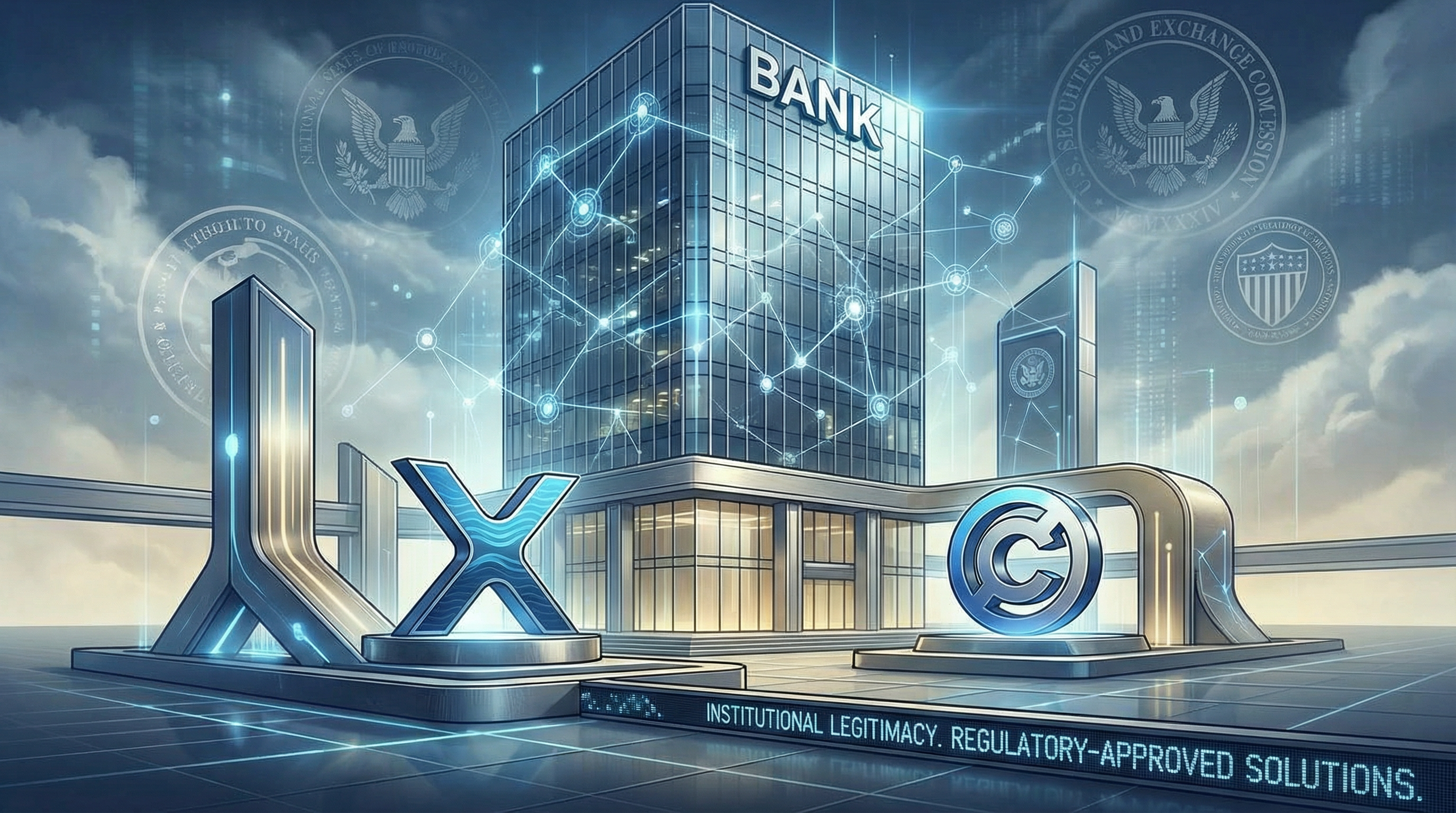
The OCC granted conditional approval for five crypto firms—including Ripple and Circle—to operate as national trust banks. This marks a watershed moment in U.S. crypto regulation, signaling a shift from enforcement to integration.

On December 12, 2025, the Office of the Comptroller of the Currency made an announcement that will reshape the relationship between cryptocurrency and traditional finance. The federal banking regulator granted conditional approval for five crypto firms to operate as national trust banks. Among them are two of the industry's most prominent names: Ripple and Circle.
This decision represents the clearest signal yet that U.S. regulators are prepared to bring digital asset companies inside the regulated banking system. After years of enforcement actions, regulatory uncertainty, and debates over whether crypto belongs in banking at all, the OCC has opened the door. The implications extend far beyond the five firms involved. This is a structural shift in how America approaches digital finance.
The approved firms are Ripple National Trust Bank, First National Digital Currency Bank (owned by Circle), BitGo Bank & Trust, Fidelity Digital Assets, and Paxos Trust Company. Two are new charters. Three are conversions from state trust companies to national banks. All five must still satisfy capital, governance, compliance, and risk-management conditions before they can begin operations. But the conditional approval itself is a milestone.
What National Trust Bank Charters Actually Mean
National trust banks are not traditional retail banks. They cannot take deposits from the public or make loans. That distinction is important. The OCC is not turning Ripple or Circle into JPMorgan Chase. Instead, these charters allow firms to custody assets, process payments, and provide fiduciary services under federal supervision.
This matters because it gives crypto companies a regulated foothold inside the U.S. banking system. They gain access to federal payment rails, clearer regulatory oversight, and the ability to operate across state lines without navigating a patchwork of state money transmitter licenses. For years, crypto firms have complained that inconsistent state regulations create compliance burdens that favor incumbents. A national charter solves that problem.
The OCC already supervises approximately sixty national trust banks. These institutions range from custody providers to specialized payment processors. Adding five crypto-focused firms to that roster is not unprecedented, but it is significant. Anchorage Digital became the first crypto firm to receive a national trust charter in 2021. That approval established the precedent. The December 2025 approvals expand it into a pattern.
Comptroller of the Currency Jonathan Gould emphasized that new entrants benefit consumers, the banking industry, and the economy. In his statement, he said the OCC will continue to provide a path for both traditional and innovative approaches to financial services. That language signals an openness to further crypto integration, not a one-time exception.

The Five Firms and What They Do
Each of the five approved firms brings different capabilities and business models to the table.
Ripple National Trust Bank is a newly approved charter tied to Ripple Labs, the company behind the XRP cryptocurrency and RippleNet payment network. Ripple has spent years building cross-border payment infrastructure for banks and financial institutions. The trust bank charter will allow Ripple to custody assets, process payments, and support its dollar-backed stablecoin, RLUSD. Ripple CEO Brad Garlinghouse called the approval a "massive step forward," particularly for RLUSD, which now operates under both federal OCC oversight and state supervision from the New York Department of Financial Services.

First National Digital Currency Bank is associated with Circle, the issuer of USDC, the second-largest stablecoin by market capitalization. Circle has positioned itself as a bridge between traditional finance and crypto. The trust bank charter gives Circle federal regulatory status for its custody and payment operations. This could accelerate institutional adoption of USDC, as banks and financial institutions gain confidence that Circle operates under the same federal standards as traditional trust banks.
BitGo, Fidelity Digital Assets, and Paxos are converting existing state trust charters into national ones. BitGo provides custody and security solutions for institutional investors. Fidelity Digital Assets is the crypto arm of Fidelity Investments, one of the largest asset managers in the world. Paxos issues stablecoins and provides blockchain infrastructure for financial institutions. All three already operate under state-level trust company charters. Converting to national charters gives them broader geographic reach and uniform federal oversight.
Together, these five firms represent a cross-section of the crypto industry: stablecoin issuers, custody providers, payment processors, and institutional infrastructure. Their approval suggests the OCC is not limiting national trust charters to a single type of crypto business. Instead, it is opening the door to a range of digital asset services, provided firms meet federal standards.
The Conditions and What Comes Next
Conditional approval is not final approval. Each firm must satisfy a list of requirements before it can begin operations. The OCC has not publicly disclosed the full list of conditions for each firm, but typical requirements include demonstrating adequate capital, establishing robust governance and risk-management frameworks, implementing anti-money laundering and sanctions compliance programs, and hiring qualified management teams.
These conditions are not trivial. The OCC applies the same standards to crypto firms that it applies to traditional banks. That means comprehensive compliance programs, regular examinations, and ongoing reporting requirements. Firms that fail to meet the conditions will not receive final approval. Even after final approval, they remain subject to OCC supervision and enforcement authority.
The timeline for meeting these conditions varies. Some firms may be ready within months. Others may take longer. The OCC has not set a public deadline, but firms will likely prioritize moving quickly. The longer they operate under state charters or without federal status, the more they risk being left behind as competitors gain federal approval.
Once operational, these national trust banks will join the approximately sixty other national trust banks already supervised by the OCC. They will be subject to the same examination processes, capital requirements, and enforcement actions as any other federally chartered institution. That level of oversight is exactly what many crypto advocates have requested. It provides regulatory clarity and legitimacy.
Industry Reaction: Celebration and Skepticism
Crypto companies welcomed the OCC's decision as a long-awaited validation. For years, the industry has argued that clear federal regulation would unlock institutional adoption and provide consumer protections. The national trust bank charters deliver on that promise. They create a pathway for crypto firms to operate inside the regulated banking system, rather than in a gray area outside it.
Ripple CEO Brad Garlinghouse was particularly enthusiastic. He highlighted that RLUSD, Ripple's stablecoin, now operates under both federal OCC oversight and New York state supervision. This dual regulatory framework gives institutional users confidence that RLUSD meets rigorous standards. Garlinghouse framed the approval as a step toward mainstream adoption of crypto payment infrastructure.
Circle also celebrated the decision. As the issuer of USDC, Circle has long positioned itself as a compliant, regulated stablecoin provider. The national trust bank charter reinforces that positioning. It allows Circle to market USDC as a stablecoin backed by a federally regulated institution, which could drive adoption among risk-averse institutional users.
Traditional banking groups were less enthusiastic. The Bank Policy Institute, a trade association representing large banks, issued a statement warning that the OCC's decision raised "substantial unanswered questions." The group questioned whether the conditions imposed on crypto firms are appropriately tailored to the risks they pose. They also expressed concern that crypto firms might gain access to banking privileges without being subject to the same rules that apply to traditional banks.
This criticism reflects a broader tension in the banking industry. Established banks have invested heavily in compliance infrastructure and operate under strict regulatory oversight. They worry that crypto firms could gain a competitive advantage by accessing federal charters without bearing the full burden of traditional banking regulation. Whether that concern is justified remains to be seen. The OCC insists it is applying the same standards to crypto firms as it does to traditional banks. But the details of the conditions imposed on each firm are not fully public, so outside observers cannot verify that claim.
Where XRP Fits Into the Picture
Despite Ripple's prominence in the announcement, the OCC's approval does not directly regulate or authorize XRP, Ripple's native cryptocurrency. The charter applies to Ripple National Trust Bank, a separate legal entity that will focus on custody, payments infrastructure, and stablecoin operations. XRP remains a separate asset, and its regulatory status is unchanged by the charter.
That distinction is important. XRP has been at the center of a multi-year legal battle between Ripple and the Securities and Exchange Commission. The SEC sued Ripple in 2020, alleging that XRP is an unregistered security. In July 2023, a federal judge ruled that XRP sold on public exchanges is not a security, but XRP sold directly to institutional investors is. That mixed ruling left XRP's regulatory status partially unresolved. The OCC's approval of Ripple's trust bank charter does not change any of that.
However, the charter could still have a meaningful impact on XRP over time. Ripple's deeper integration into the federal banking system may encourage more financial institutions to use RippleNet, Ripple's cross-border payment network. XRP functions as a bridge asset in that network, facilitating currency conversions and liquidity management. If more banks adopt RippleNet, demand for XRP could increase.
That said, any such impact would likely unfold gradually. The trust bank charter is not a short-term market catalyst. It is a long-term structural development that could support broader institutional adoption of Ripple's infrastructure. Whether that translates into higher XRP prices depends on many factors, including ongoing litigation, competition from other payment networks, and macroeconomic conditions.
The market's initial reaction reflected this nuance. XRP showed little immediate movement after the announcement. It was trading around $1.99 in mid-December, below the closely watched $2 level, amid a broader crypto market pullback. Investors appeared to recognize that the trust bank charter is a positive development for Ripple as a company, but not a direct catalyst for XRP as an asset.
A Broader Shift in U.S. Crypto Policy
The OCC's decision is part of a larger pattern. U.S. crypto policy is shifting from enforcement-heavy oversight toward conditional inclusion. For years, the dominant regulatory approach was to bring enforcement actions against crypto firms for alleged violations of securities laws, money transmitter rules, or anti-money laundering requirements. That approach created uncertainty and drove some firms offshore.
The national trust bank charters represent a different approach. Instead of blocking crypto firms from the banking system, the OCC is inviting them in—provided they meet federal standards. This is not deregulation. It is regulated integration. Firms that receive national trust bank charters will be subject to the same supervision, examinations, and enforcement actions as traditional banks. But they will also gain the benefits of federal charters: geographic reach, regulatory clarity, and access to federal payment systems.
This shift aligns with broader changes in the political and regulatory environment. The Trump administration has signaled support for crypto-friendly policies. Congress passed the GENIUS Act in July 2025, creating a federal framework for stablecoins. The SEC's enforcement posture toward crypto has softened compared to previous years. Taken together, these developments suggest that U.S. policymakers are moving toward a framework that accommodates digital assets within the existing financial system, rather than treating them as inherently incompatible with regulation.
The OCC's approvals also reflect a recognition that crypto is not going away. Stablecoins alone represent over $150 billion in market capitalization. Major financial institutions, including Fidelity, PayPal, and Visa, have launched crypto products. Retail and institutional investors hold digital assets as part of diversified portfolios. Ignoring or blocking this activity is no longer a viable regulatory strategy. The question is how to bring it inside the regulatory perimeter.
National trust bank charters provide one answer. They allow crypto firms to operate under federal supervision while preserving the innovation and efficiency that make digital assets attractive. Whether this approach succeeds depends on execution. If the OCC enforces rigorous standards and holds crypto firms accountable, the charters could enhance financial stability and consumer protection. If oversight is lax, they could create new risks.
What This Means for the Future of Crypto Banking
The approval of five national trust bank charters in a single announcement is unprecedented. It suggests the OCC is not treating these as isolated exceptions but as part of a broader strategy to integrate digital assets into the banking system. That has significant implications for the future of crypto banking.
First, it creates a pathway for other crypto firms to seek national trust bank charters. The OCC has now established a clear precedent. Firms that can meet federal standards have a route to federal banking status. This could encourage more crypto companies to invest in compliance infrastructure and apply for charters. Over time, we may see a tier of federally regulated crypto banks operating alongside traditional banks.
Second, it puts pressure on state regulators. Crypto firms that operate under state money transmitter licenses or state trust company charters may now prefer national charters. National charters offer broader geographic reach and uniform federal oversight, which can be more efficient than navigating fifty different state regulatory regimes. States that want to remain relevant in crypto regulation will need to ensure their frameworks are competitive.
Third, it raises questions about the future of decentralized finance. National trust bank charters are designed for centralized entities that can meet federal compliance standards. They do not apply to decentralized protocols or autonomous smart contracts. As the OCC brings more crypto firms inside the regulated banking system, a divide may emerge between regulated, centralized crypto services and unregulated, decentralized alternatives. How regulators address that divide will shape the industry's evolution.
Fourth, it could accelerate institutional adoption of crypto. Banks and financial institutions have been cautious about integrating digital assets, in part because of regulatory uncertainty. National trust bank charters reduce that uncertainty. Institutions can now partner with federally regulated crypto firms, knowing those firms operate under OCC supervision. This could drive adoption of stablecoins, custody services, and payment infrastructure.
Finally, it sets the stage for future regulatory debates. The Bank Policy Institute's criticism reflects genuine concerns about whether crypto firms will be held to the same standards as traditional banks. Those concerns will not disappear. As the five approved firms begin operations, regulators, industry participants, and policymakers will scrutinize whether the OCC's oversight is rigorous enough. If problems emerge, there will be calls for stricter rules. If the system works smoothly, there will be pressure to expand access to more firms.

Conclusion
The OCC's conditional approval of national trust bank charters for Ripple, Circle, BitGo, Fidelity Digital Assets, and Paxos is a turning point in U.S. crypto regulation. It marks a shift from exclusion to conditional inclusion, from enforcement to integration. For the first time, major crypto firms have a clear pathway to operate as federally regulated banks.
This is not a free pass. The firms must meet rigorous conditions before they can begin operations. Once operational, they will be subject to the same supervision and enforcement as traditional banks. But the door is open. The OCC has signaled that crypto firms can be part of the federal banking system, provided they meet federal standards.
For Ripple, the approval strengthens its position as a provider of cross-border payment infrastructure. For Circle, it reinforces USDC's status as a regulated stablecoin. For BitGo, Fidelity, and Paxos, it expands their geographic reach and regulatory legitimacy. For the broader crypto industry, it provides a model for how digital asset firms can gain federal banking status.
The implications will unfold over months and years, not days. But the direction is clear. The United States is building a framework that accommodates digital assets within the regulated financial system. The OCC's December 2025 approvals are a major step in that direction.
Unlock Free Compliance Tools
Join thousands of tokenization professionals using Open Compliance Project to navigate global regulations.
- AI-powered compliance gap analysis
- Real-time regulatory alerts for 140+ countries
- Personalized compliance calendar
- Save and track your research
Create Your Free Account
No credit card required. Get instant access to all features.
Related Articles