Crypto Regulatory Roundup: Fed Access & Banking Conflicts
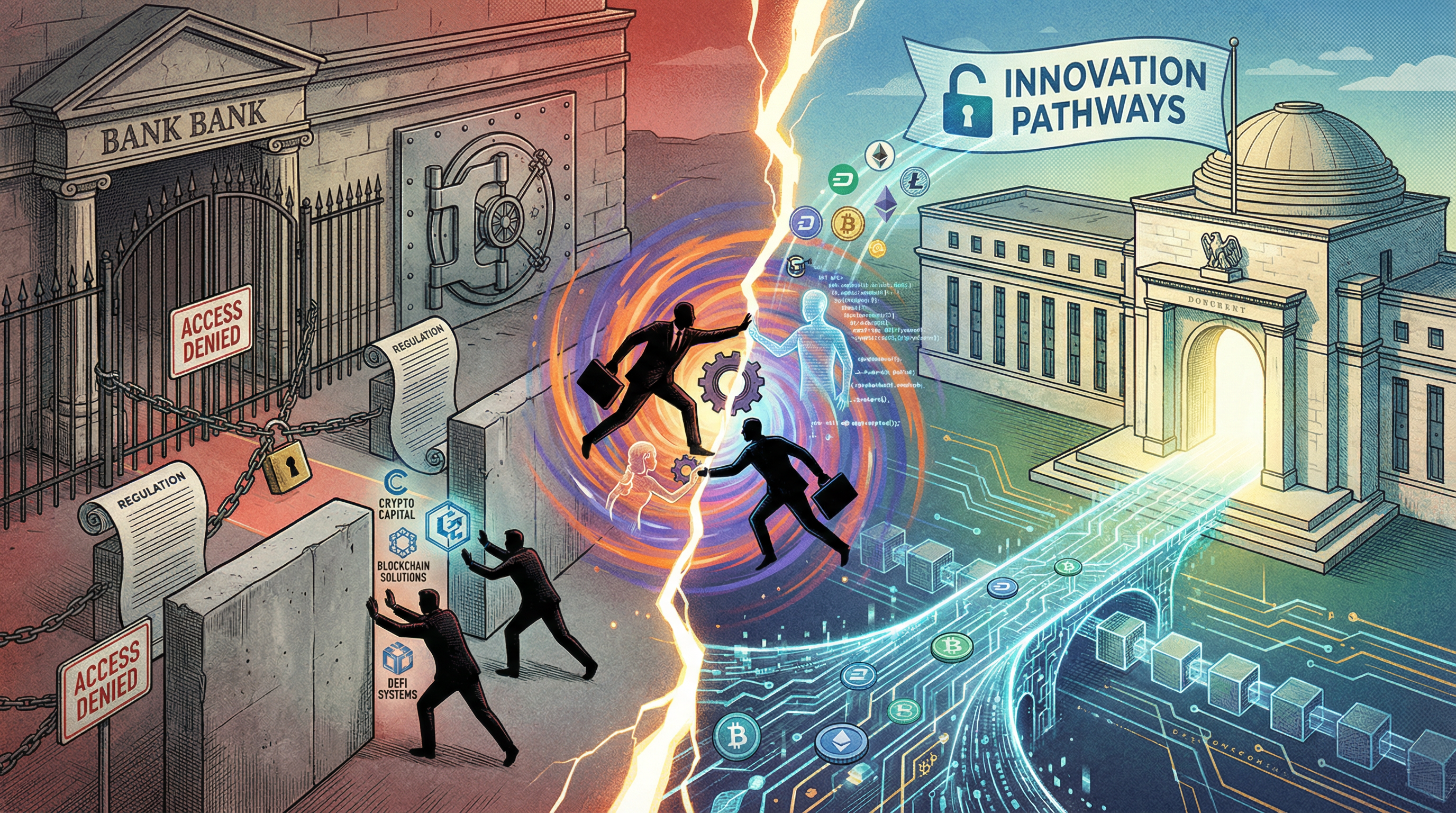
The final weeks of 2025 brought significant clarity and conflict regarding institutional access and consumer protection in the digital asset market. The most impactful development centers on the ongoing struggle for banking access, with Senator Lummis highlighting the potential of the Federal Reserve's "skinny" accounts to provide direct access for crypto companies and fintech startups, potentially ending Operation Chokepoint 2.0.
Open Compliance Project: Weekly Regulatory Roundup – December 27, 2025
Introduction
The final weeks of 2025 brought significant clarity and conflict regarding institutional access and consumer protection in the digital asset market. The most impactful development centers on the ongoing struggle for banking access.
Senator Lummis highlighted that the Federal Reserve's move toward offering "skinny" accounts could be a crucial step. This mechanism aims to provide crypto companies and fintech startups with direct access to the Fed, potentially ending the practice known as Operation Chokepoint 2.0.
For businesses, this shift is critical. Direct access reduces reliance on commercial banks that have historically been hesitant or actively hostile toward the sector. It promises greater stability and potentially lower operational costs for compliant firms.
Institutional Access and De-Risking Conflicts
The core challenge for many digital asset firms remains securing reliable banking relationships. This week showed both potential breakthroughs and persistent friction points.
The Promise of Fed Accounts
Senator Lummis suggested that the availability of "skinny" accounts at the Federal Reserve acts as a hedge against debanking. This is a significant political and operational statement.
These accounts would allow compliant firms to access core financial infrastructure without needing a commercial intermediary. This reduces counterparty risk and systemic vulnerability caused by centralized gatekeepers.
While the details of implementation are still being finalized, the intent is clear: to ensure that regulated financial technology companies are not unfairly excluded from the U.S. banking system. This provides a pathway for greater financial inclusion for the industry.
Persistent Debanking and Sanctions Concerns
Despite the promise of Fed accounts, commercial banks continue to exercise caution, particularly regarding sanctions compliance. JPMorgan reportedly froze the accounts of two stablecoin startups, BlindPay and Kontigo.
The reason cited was flagged exposure to sanctioned jurisdictions. This illustrates the high level of scrutiny placed on digital asset firms regarding Anti-Money Laundering (AML) and sanctions adherence.
For stablecoin issuers and other money services businesses, this is a direct warning. Robust, real-time sanctions screening and jurisdictional monitoring are non-negotiable requirements for maintaining banking relationships in the current climate. Compliance teams must prioritize effective risk management over speed of transaction.
Enforcement, Transparency, and Accountability
Several high-profile incidents this week underscored the industry’s continuing need for robust internal controls and legal accountability, ranging from data breaches to high-stakes legal proceedings.
Insider Threat Management
Coinbase CEO Brian Armstrong announced the first arrest in India related to an insider data breach. He noted that "More still to come" regarding the investigation.
This development highlights that compliance risks extend beyond external hacks and regulatory scrutiny. Internal controls, data access management, and employee monitoring are essential components of a mature compliance program.
Firms must invest in systems that track and audit access to sensitive customer and proprietary data. The cost of a breach, both financial and reputational, far outweighs the investment in preventative measures.
Consumer Protection and Compensation
Trust Wallet launched a compensation process for victims of a $7 million browser extension hack. This move demonstrates a commitment to consumer protection following a security failure.
While the hack itself is concerning, the proactive compensation mechanism sets a positive precedent for accountability in the decentralized application (dApp) and wallet sector. It builds trust, which is crucial for mass adoption.
Businesses offering self-custody tools or interfaces must clearly define their liability limits while planning for potential remediation. Having a clear, funded compensation strategy can mitigate regulatory fallout and maintain user loyalty.
High-Profile Legal Outcomes
The regulatory spotlight remains on legacy enforcement cases. Former Alameda CEO Caroline Ellison is scheduled to be released from federal custody next month.
These outcomes, while focused on past failures, serve as continuous reminders of the severe consequences of financial misconduct and fraud within the digital asset market. Compliance officers should use these cases internally to reinforce ethical standards.
Separately, the ongoing legal drama involving the Samourai Wallet co-founder, who spent Christmas Eve recounting his first day in prison, reignited debates over privacy tools and developer liability. This case continues to challenge the line between developing privacy-enhancing technology and facilitating illicit finance.
Legislative and Regulatory Outlook for 2026
The political maneuvering around future legislation and agency jurisdiction is intensifying as the year closes. This sets the stage for a potentially turbulent 2026.
The SEC vs. CFTC Dynamic
The regulatory forecast for 2026 suggests an ambitious agenda for the SEC, meeting a more empowered CFTC. This jurisdictional overlap continues to be the primary source of regulatory uncertainty in the U.S.
The SEC's focus often remains on investor protection and securities classification, while the CFTC is increasingly asserting its authority over commodities and derivatives. Businesses must structure their offerings to anticipate scrutiny from both agencies simultaneously.
This dual oversight requires careful legal classification of tokens and robust disclosure practices. Firms cannot afford to assume a single agency will govern their entire operation.
Stablecoin Legislation and Lobbying
Coinbase CEO Brian Armstrong flagged the potential reopening of the GENIUS Act as a "red line," accusing banks of lobbying Congress to limit competition. This centers on stablecoin regulation and whether banks will successfully restrict non-bank entities from issuing or benefiting from stablecoin rewards.
The debate is fundamentally about who controls the future of digital money and payments. If banks successfully limit non-bank stablecoin issuance, it could stifle innovation and centralize control over key financial infrastructure.
Businesses relying on stablecoins for payments or yield generation must closely track this legislative battle. The outcome will dictate the operational structure and competitive environment for the entire stablecoin market.
Institutional Clarity and Adoption
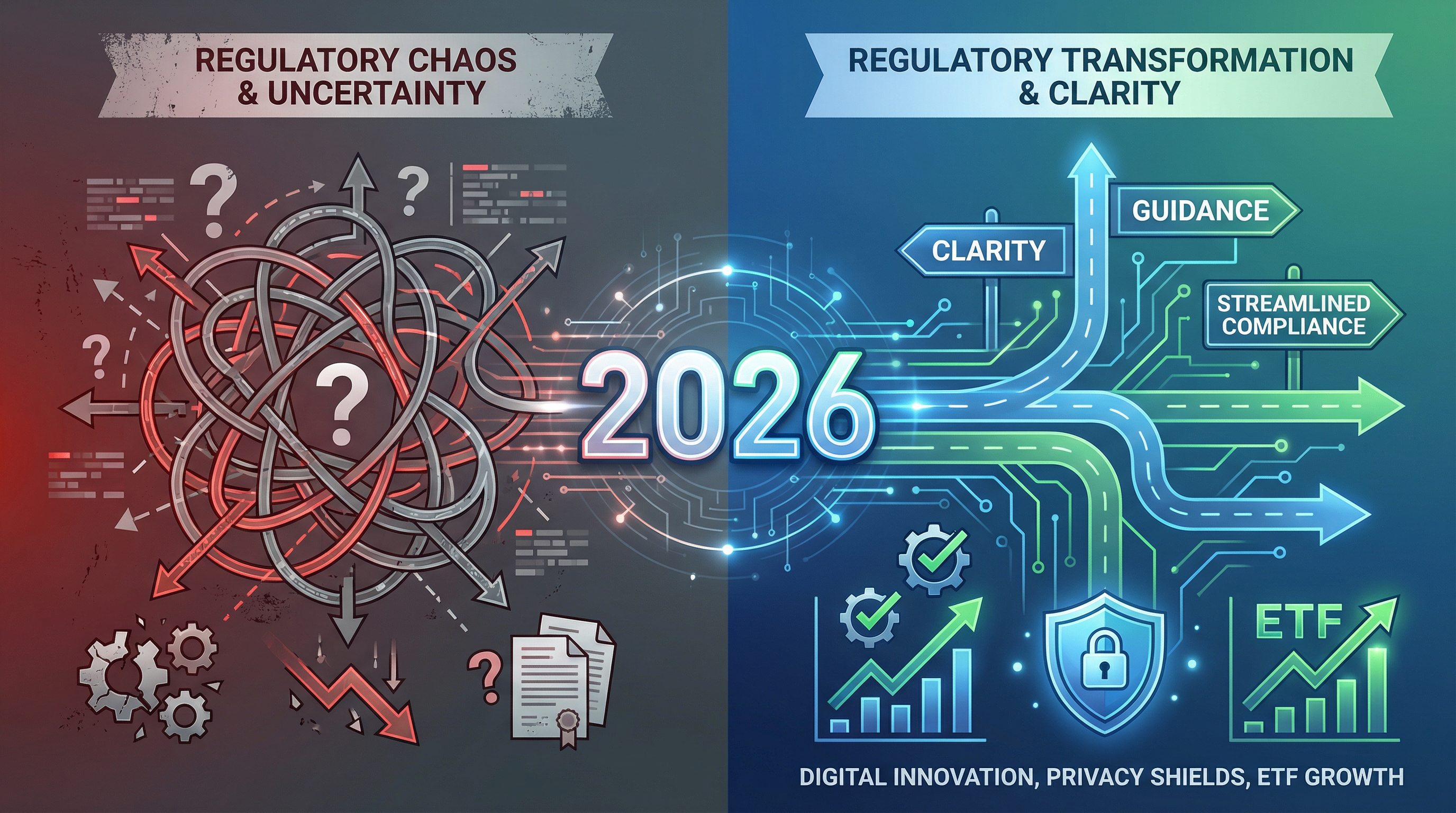
Despite the regulatory conflicts, the market is showing signs of maturity. Bitcoin drove a record spike in SEC filings in 2025, indicating that regulatory clarity is pulling institutions onchain.
When rules become clearer, even if restrictive, institutional capital flows follow. This trend suggests that the industry is moving past the initial speculative phase and into a period of regulated, institutional integration.
This influx of traditional finance requires compliant firms to adopt institutional-grade governance, reporting, and internal controls. Compliance is now a key competitive advantage in securing institutional partnerships.
Asia’s Rulebook Focus
Looking globally, stablecoins and Real World Asset (RWA) tokenization are shaping Asia's crypto rulebook in 2025. Asia often takes a more pragmatic, technology-focused approach to regulation.
The focus on RWA tokenization suggests that regulators are keen to leverage blockchain technology for efficiency in traditional finance, rather than solely focusing on speculative digital assets.
Firms operating or expanding into Asian markets should align their compliance strategies with these priorities. Demonstrating clear use cases for RWA tokenization, coupled with strong AML/KYC protocols, will likely be favored by regional regulators.
Key Takeaways
- Diversify Banking Options: Actively monitor the development of Federal Reserve "skinny" accounts as a potential pathway to mitigate commercial bank debanking risk.
- Strengthen Sanctions Screening: Implement real-time, enhanced sanctions screening for all transactions and counterparties, especially for stablecoin issuance and cross-border payments, to avoid account freezes like those experienced by BlindPay and Kontigo.
- Audit Internal Access Controls: Prioritize internal security by auditing data access and implementing strict controls to prevent insider breaches, following the Coinbase incident in India.
- Prepare for Dual Oversight: Structure token offerings and business operations to anticipate simultaneous scrutiny from both the SEC (securities) and the CFTC (commodities) in the U.S.
- Track Stablecoin Legislation Closely: Engage legal counsel to understand how potential changes to the GENIUS Act or similar legislation could impact non-bank stablecoin issuance and rewards programs.
- Adopt Institutional Governance: Upgrade compliance and reporting frameworks to meet the higher standards required by institutional partners entering the market via regulated products like Bitcoin ETFs.
What's Next
The regulatory narrative heading into 2026 is defined by a tension between financial inclusion and control. The push for direct Fed access offers a decentralized alternative to commercial banking reliance, which is a positive step for innovation. However, the lobbying efforts surrounding stablecoins demonstrate that established financial institutions are actively seeking to limit competition.
Businesses must prepare for a year of heightened enforcement and legislative battles, particularly regarding jurisdictional clarity between U.S. agencies. The market is maturing, meaning regulators expect professional-grade compliance, not just good intentions.
Focus on building resilient, transparent operations that can withstand scrutiny from multiple angles—sanctions, consumer protection, and securities law. Proactive compliance is no longer optional; it is the cost of doing business in this evolving market.
Unlock Free Compliance Tools
Join thousands of tokenization professionals using Open Compliance Project to navigate global regulations.
- AI-powered compliance gap analysis
- Real-time regulatory alerts for 140+ countries
- Personalized compliance calendar
- Save and track your research
Create Your Free Account
No credit card required. Get instant access to all features.
Related Articles